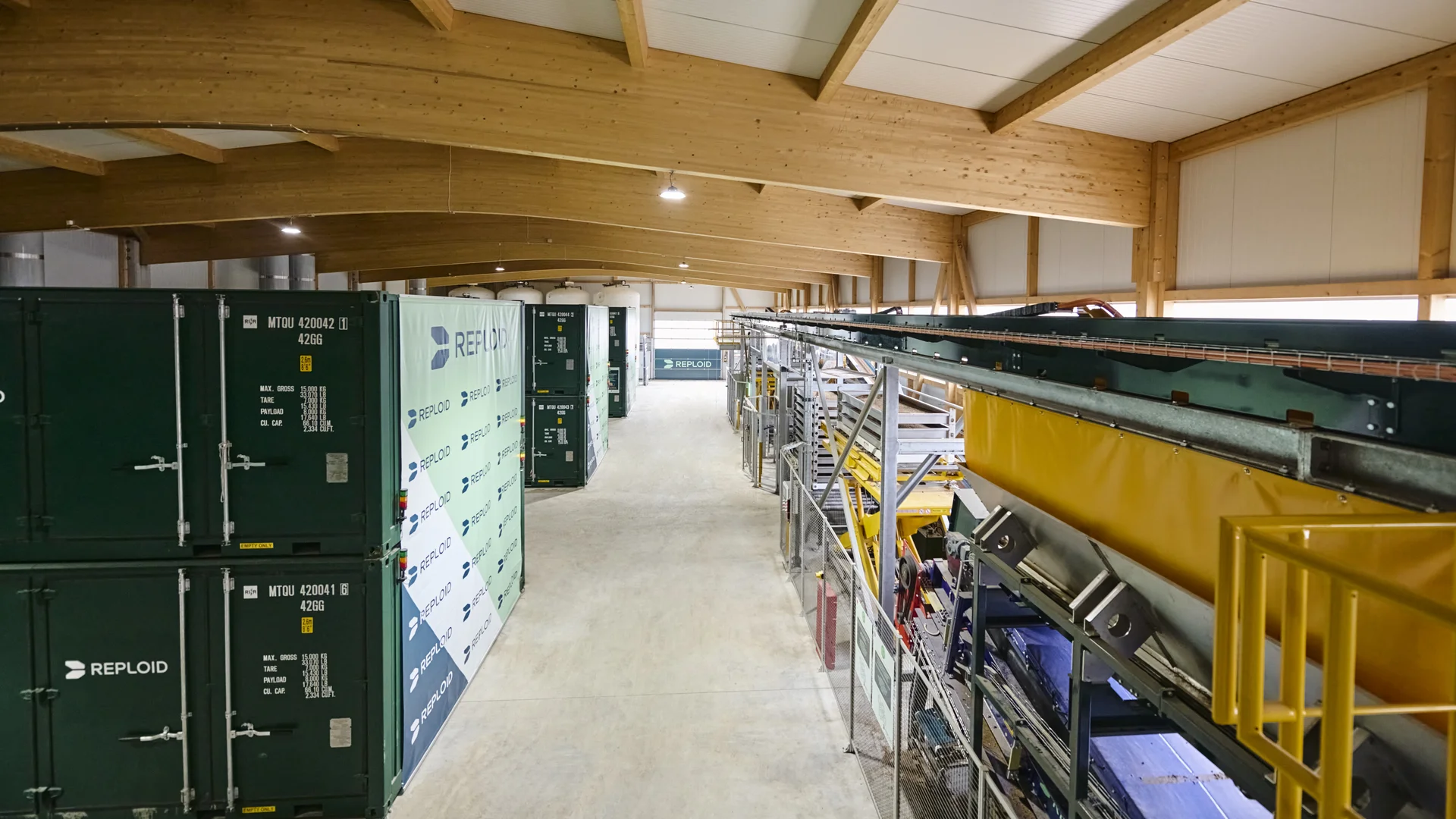

Beverage & brewing industry
Brewer's grains, pomace, fruit scraps, peels – once a cost factor, now a feedstock for insect production.
Every day, large volumes of organic by-products are generated – and most of them are still regarded as a cost factor rather than an opportunity.
REPLOID changes that. By integrating modular processing units directly into existing operations, organic by-products become a new, economically viable raw material source.
Cost-effective, scalable, and practical –
from a cost center to a value-added component.
Rising disposal and logistics costs for organic byproducts
Stricter environmental regulations and reporting requirements
Growing pressure from retailers, brands, and consumers toward a circular economy
Limited options for utilization, such as biogas or incineration
The waste materials are processed right where they are generated — shorter transport routes can reduce greenhouse gas emissions
Modular, decentral and highly-automated ReFarmUnits
The integrated 360-degree system means that input sourcing, plant operations, offtake, and marketing are all handled by a single provider
Predictable additional revenue stream
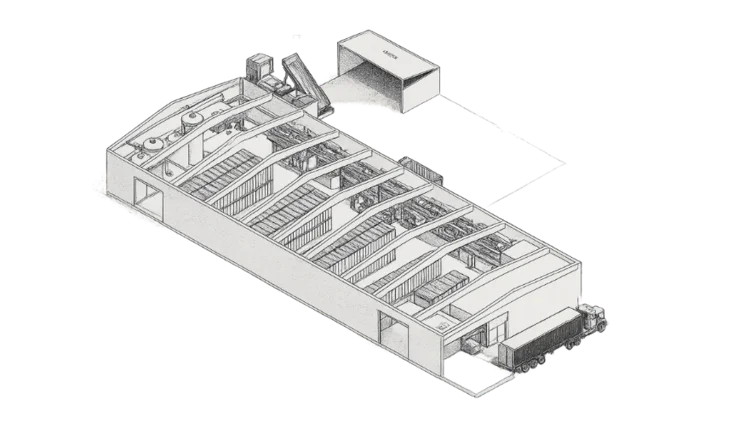
The facility comprises 84 larval-rearing containers, supplemented by 12 nursery units and integrated post-processing. This creates a closed-loop system for the recycling of organic waste.
| Parameter | Specifications |
|---|---|
| Input | 57,240 tons per year |
| Products | Dried larvae: 4,200 tons per year, fresh frass: 13,165 tons per year |
| Staffing requirement | Approximately 8 employees per shift, 3-shift system, 5 days a week |
| Site requirements | Building area: approximately 6,500 m² |
We assess the composition, quantities, and availability of your organic waste and by-products, thereby laying the groundwork for an economically viable utilization plan.
Our modular units are tailored to your infrastructure, material flows, and operational requirements – from pilot projects to industrial implementation.
Previously unused by-products are being transformed into usable raw materials and new economic opportunities – while at the same time reducing disposal costs.
Brewer's grains, pomace, fruit scraps, peels – once a cost factor, now a feedstock for insect production.

Whey, production residues, and organic byproducts are generated in large quantities, creating significant pressure to recycle and dispose of them.

Peelings, sorting waste, and defective products become raw materials instead of waste.

Flour and dough byproducts, as well as off-spec products, are recycled as part of an integrated process.
The ReFarmUnit converts by-products into high-value products such as insect protein, insect fat, and organic fertilizer, thereby creating new sources of revenue. At the same time, disposal and raw material costs can be significantly reduced. The result is higher value creation and improved margins.
The ReFarmUnit is a modular system that connects directly to existing by-products from food production. Co-location minimizes logistics efforts and costs. Existing infrastructure (energy, buildings, personnel) can be efficiently utilized.
If space is limited, the customer has the flexibility to choose an external location (e.g., a biogas operator). The customer remains the key player as the owner of the substrate and a strategic partner in the facility. The customer continues to secure the value generated from their by-products—without any operational burden. REPLOID handles implementation and operation, while the customer retains control and economic benefits.