Life Waste 4 Growth
About the Project
The main objective of LIFE Waste4Growth is to strengthen the circular economy by converting insect frass—the primary byproduct of black soldier fly (Hermetia illucens) farming—into organic, biostimulant fertilizers. According to EU Regulation 2021/1925, insect frass is a mixture of insect excreta, undigested feed substrate, and shed exoskeletons generated during insect rearing.
Currently, insect frass is used for biogas production, meaning its full potential is not being realized. By upgrading insect frass into high-quality organic biostimulant fertilizers, LIFE Waste4Growth supports more sustainable, productive, and climate-resilient agriculture in Europe.
The project builds on the results of LIFE Waste2Protein (2019–2023, LIFE18 ENV/DE/000011), during which the modular, decentralized ReFarmUnits technology for insect-based bio-waste treatment was developed.
Background
Regulatory pressure is driving a significant increase in compliance costs and risks for stakeholders in the agriculture and food sectors, while extreme weather events, droughts, and emerging diseases are causing crop failures that threaten yields and profitability. At the same time, conventional farming practices and a strong reliance on synthetic fertilizers are accelerating soil degradation and groundwater pollution, undermining both long-term productivity and environmental health.
These challenges highlight the urgent need for sustainable, circular solutions aligned with EU policy priorities, including the European Green Deal, the Farm to Fork Strategy, and the Circular Economy Action Plan. Valorizing insect frass into organic, biostimulant fertilizers directly supports these goals by reducing dependence on synthetic inputs, improving soil health, and enhancing crop yields.
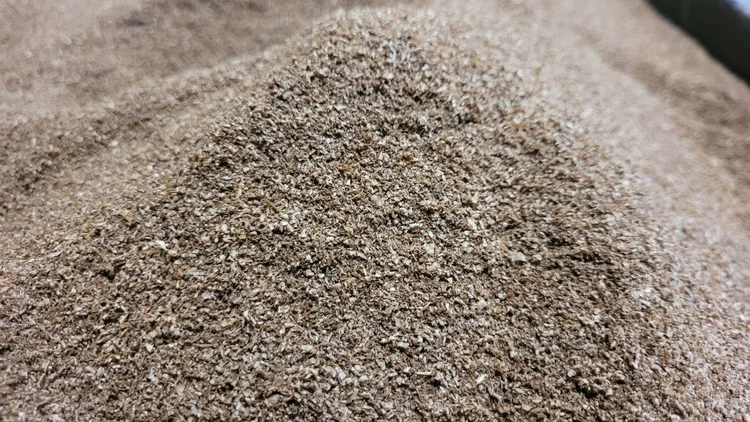
What is insect frass?
Insect frass is a mixture of insect excreta, undigested feed substrate, and shed exoskeletons, forming a fibrous material that typically contains a very high level of organic matter (80–90%) and serves as a rich organic resource for agriculture.
It supplies plants and soil with essential macronutrients—nitrogen (N), phosphorus (P), potassium (K), sulfur (S), and magnesium (Mg)—as well as important micronutrients such as zinc (Zn), manganese (Mn), iron (Fe), and boron (B). The nitrogen in the excreta is primarily in organic form, with around 20–30% present as plant-available ammonium (NH₄⁺).
Insect frass also contains biostimulant compounds such as humic and fulvic acids, amino acids, and chitin, along with beneficial microorganisms that promote plant growth and enhance stress resilience. These properties make insect frass a powerful, sustainable fertilizer and biostimulant that supports both soil health and crop yields.
Objectives
The overarching goal of LIFE Waste4Growth is to enhance the valorization of insect frass from REPLOID ReFarmUnits by developing an innovative production process that upgrades insect frass and chitin-rich byproducts into high-quality, functional organic biostimulant fertilizers (both solid and liquid).
Specifically, the project aims to:
Improve soil quality and health by enriching soils with organic matter and beneficial nutrients.
Strengthen plant resistance to drought and enhance yield performance under water stress conditions.
Increase plant resistance to pathogens through the natural compounds and beneficial microorganisms present in insect frass.
Reduce the carbon footprint of fertilization compared to synthetic alternatives, contributing to climate change mitigation.
Enhance the climate resilience of European agriculture by promoting sustainable and resource-efficient farming systems.
Projektdetails
| Akronym | Life Waste4Growth |
| Reference | LIFE24-ENV-AT-LIFE-Waste4Growth/101214277 |
| Project duration | 01/07/2025 – 30/6/2029 |
| Total budget | 2,979,993 € |
| EU contribution | 1,787,996 € |
| Coordinating beneficiary | Reploid Group AG |
| Contact person | Jana Vasickova, vasickova@reploid.eu |